
The first thing any traveler wants to do upon arriving at their destination is kick back, relax, and recuperate. You're obviously going to give them better than the bare floor. But at the same time, furniture is expensive. New items cost a lot upfront and are almost a liability with an open party policy or pet policy. Used Airbnb furniture? It's a potentially ideal alternative if done the right way. This article explains how.
Cost of Furnishing an Airbnb with Used vs. New Furniture
Considering the many costs that come with operating an Airbnb – from professional cleaning to property insurance to maintenance fees – every host can appreciate some savings. Furniture represents a big expense and is therefore a great opportunity to reduce spending. You can furnish an Airbnb for a fraction of what new pieces would cost, freeing up capital for other improvements or marketing.
The savings you'll find shopping at local thrift stores, Facebook Marketplace, Craigslist, and estate sales could cover professional photography, a year of premium Airbnb hosting tools, or furnishing an additional bedroom entirely. And don't forget – beyond the wallet, buying used is inherently sustainable, as you're extending the lifecycle of quality items and reducing waste.
To put the numbers into context, we've whipped up an example scenario showing how common Airbnb furniture items stack up:
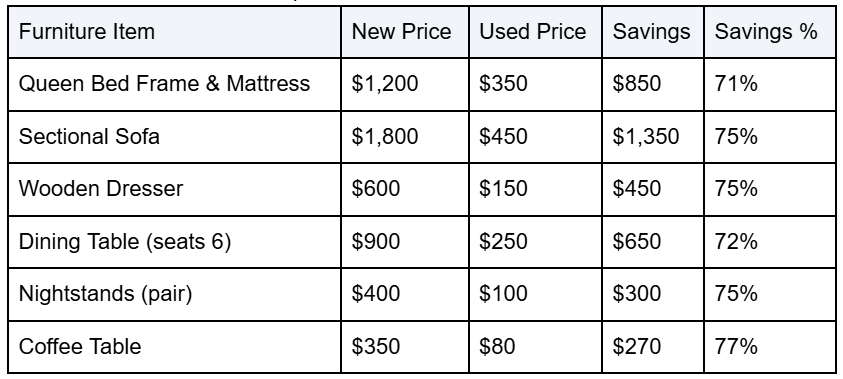
Total for Complete Bedroom/Living Room Setup:
New Furniture - $5,250
Used Furniture - $1,380
Total Savings - $3,870 (74%)
What Do You Need to Properly Furnish an Airbnb?
Before even going to the store or flea market, Airbnb furniture cost savings start with a proper shopping list. Length can vary depending on the space at hand. For instance, small studios will require less furniture than multi-bedroom apartments or homes.
In either case, there's something to be said about balance. Too much or too little either makes things more expensive than they need to be or leaves guests improperly accommodated.
So, what's really necessary, and what's optional? Here's a list of starter picks:
1. Quality Bed Frame & Mattress
The bed is your biggest investment and guest priority. Opt for a sturdy frame that can withstand frequent use. A medium-firm mattress offers broad appeal. Consider a mattress protector to extend lifespan and maintain hygiene – this pays for itself quickly.
2. Comfortable Seating
A sofa or armchair gives guests a place to unwind. Look for durable upholstery in neutral colors that hide wear. Microfiber or performance fabrics are excellent for high-traffic rentals as they resist stains and are easy to clean.
3. Dining Table and Chairs
Even small spaces benefit from a compact dining area. Wood tables are more durable than glass and require less maintenance. Ensure chairs are sturdy; wobbly seating frustrates guests and invites damage.
4. Storage Solutions
Dressers, nightstands, and shelving are essential for guest convenience. Avoid particle board furniture; solid wood or quality plywood lasts longer. Open shelving can feel cramped, so balance storage with open space.
5. Window Treatments
Curtains or blinds serve both function and aesthetics. Blackout options are highly valued for better sleep. Choose machine-washable fabrics to keep maintenance costs down.
6. Lighting Fixtures
Adequate lighting improves the entire guest experience. Include bedside lamps, overhead fixtures, and accent lighting. Energy-efficient LED bulbs reduce replacement costs over time.
7. Coffee Table or Side Tables
These functional pieces add polish to living spaces without breaking the budget. Look for pieces with hidden storage to maximize utility in smaller rentals.
The Benefits of Used Furniture for Airbnb
American capitalism has us under the impression that the only state to buy something in is new. Used stuff? Paint it all with the same brush as ratty, old, and unreliable. In reality, nothing could be further from the truth. When shopped for with smarts, previously owned
furniture can be a game-changer for your Airbnb budget. The most obvious benefit? Cost savings. You can furnish an entire property for a fraction of what new pieces would cost, freeing up capital for other improvements or marketing. Beyond the wallet, buying used is inherently sustainable – you're extending the lifecycle of quality items and reducing waste.
Used furniture also opens doors to unique, character-filled pieces that mass-produced new items simply can't match. Vintage dressers, solid wood tables, and one-of-a-kind accent pieces give your rental personality and help it stand out in a crowded market. Guests often appreciate the charm and authenticity.
Perhaps most importantly, used furniture holds value remarkably well. Unlike new pieces that depreciate immediately, quality secondhand items maintain their worth. If you ever decide to upgrade or sell the property, you can recoup much of your investment. The key is knowing what to look for and what to avoid – which is exactly what we'll cover next.
Airbnb Furniture Buyer Beware
Used furniture is nothing to sneeze at. Most of the time. It's important to exercise good judgement when selecting items so you don't waste money trying to save money. That cheap armchair may seem like a good deal at face value, but end up broken within a couple of months – or worse. It's not unheard of for fabric to reveal surprise stains, rips, and even mite infestations once brought home.
Get acquainted with the following red flags early on so anything you do buy pays off in value over the long run.
Unfamiliar Odors: A lingering smell of mildew, smoke, or pet urine is almost impossible to eliminate completely. If the piece still smells after cleaning attempts by the seller or after sitting outside, it’s best to walk away.
Sagging Cushions or Warped Frames: Sit, press, and tilt every part of the furniture. Uneven weight distribution, creaking sounds, or wobbly legs can signal hidden structural damage that won’t hold up to frequent guest use.
Unexplained Stains or Discoloration: What looks like a minor blemish could be evidence of mold growth or fluid damage inside the padding. Always inspect under cushions and along seams.
Missing or Replaced Hardware: Screws, bolts, or brackets that don’t match may indicate previous repairs. It’s a clue that the item has already been through stress – something worth considering if it will face heavy turnover in a rental.
Signs of Infestation: Black specks, tiny shed shells, or bite marks on wood are big warning signs of bed bugs or other pests. Bringing a flashlight to check seams and joints can save you a costly extermination bill later.
Overly Polished Listings or Photos: If an online seller relies on close-ups or avoids showing certain angles, assume there’s something to hide. Ask for full lighting photos and insist on seeing the piece in person whenever possible.
The bottom line? Smart used furniture purchasing is a proven strategy that reduces startup costs without compromising quality or satisfaction. Thousands of successful Airbnb hosts have proven this works. Again, if done right. Now that you know best practices and red flags, there's no reason you can't make local thrift stores, estate sales, and online marketplaces work as an alternative to Structube.